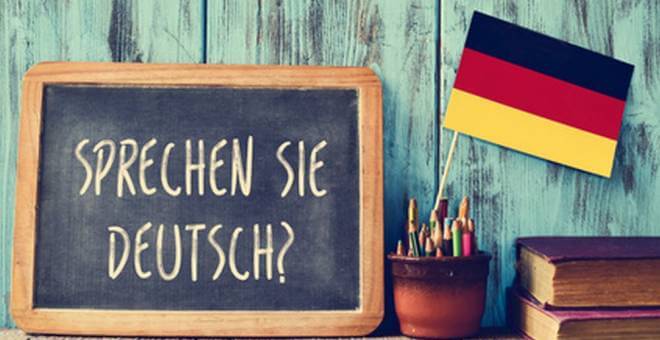
The German long ago had the glory of one of the most difficult languages to learn. This refuses many people to take up with it before they even begin. Whether there is reason to be afraid of it, what its specifics and other curious details are, you can learn from the next text. Scientists suggest that all German languages originate from a common Old German language. Today, however, they are divided into three main groups and modern German falls into the Western German languages along with English, Dutch, Yiddish, Luxembourg, Africans, West African. It is believed that it formed itself as a self-contained around the 6th century when the so-called GornoGerman shift of consonants began. Around the mid-14th century, he began to take his modern form. It is a curious fact that the normalization of spelling took place in 1901 and only in 1996. the German governments of Germany, Austria and Switzerland (in them the German language is official) decide to introduce certain changes in spelling rules. Some German provinces protest, but reform enters the education system officially in 2006. Unlike English and Bulgarian, German still keeps its maturity system. Probably one of the reasons why German is considered difficult. However, the fact is that as any part of grammar and maturity can be learned with sufficient exercise. The same applies to the times here are 6 . Two simple . present and past, and 4 complex - past uncertain, past in advance, future and future in advance. Beginners in German often find difficulties in speech. It is subject to strict rules, and especially in complicated sentences it is important to listen to what has been said to the end to understand the exact meaning. But perhaps the most interesting thing about German is words or at least one of them. Whether you know the language or not, in any case you have heard of the German words that are .. or those that are simply untransmitted to another language. The Germans have a habit of simply mixing two or more words into one to get a new one. This tactic has its advantages, for example, because you do not have to learn new words. If you know the meaning of the merge, you will also know the meaning of the word received from them. It is difficult, however, if you try to translate this word into another language because most often such an equivalent does not exist and you have to use several separate ones. Here are some examples:
- Weltschmerz - literally means world pain. The word is a combination of Welt - the world and Schmerz - a pain. It is used to describe the sense of despondency and hopelessness you are gaining as a result of the current situation in the world.
- Torschlusspanik Literally, the tor is translated as Generally Torschlusspanik is the fear that you don't have enough time to accomplish all your goals.
- Rindfleischetikettierungsueberwachungsaufgabenuebertragungsgesetz - Yeah, we're sure it's a word. But not just any one, but officially the longest in German. It consists of 63 letters and means - a law that requires labelling of bovine and beef products. Of course, it is not used in the everyday language but rather a specific term. Which does not, however, cancel the question whether anyone is able to pronounce it smoothly at all?
Fortunately, to speak and write well in German, you do not necessarily know words like Randfleischetikettierungsueberwachungsaufgabenuebertragungsgesetz. You just have to follow the rules of grammar and learn how to write and pronounce words. Here is another advice that can facilitate this process: In German there are three grammatical generas. An indication of which word it is in, the pre-arranged member. Therefore, always study the nouns with the respective idling member. After all, German is just as difficult as any other foreign language. And to learn it, you will need only perseverance, good motivation and proper teacher. And for the last one, you can trust us.
More about our German courses can be seen here . . https://omegals.bg/kursove/za-vyzrastni/nemski-ezik/
If you want to learn how to write and speak freely in German . . contact us . . Tel: 02/423 21 21; mob: 0878 566 537; email: office@omegals.bg
Take a look at this: